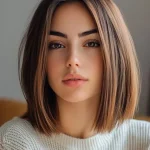
Finding hair color ideas is easy. Choosing one that still looks right after salon lighting disappears, roots grow in, and the first few washes pass is harder. The most useful approach is to decide what kind of change you want, then match the shade to your natural depth, preferred undertone, desired contrast, and willingness to maintain it. These hair color ideas are organized to help you compare the options before you commit.
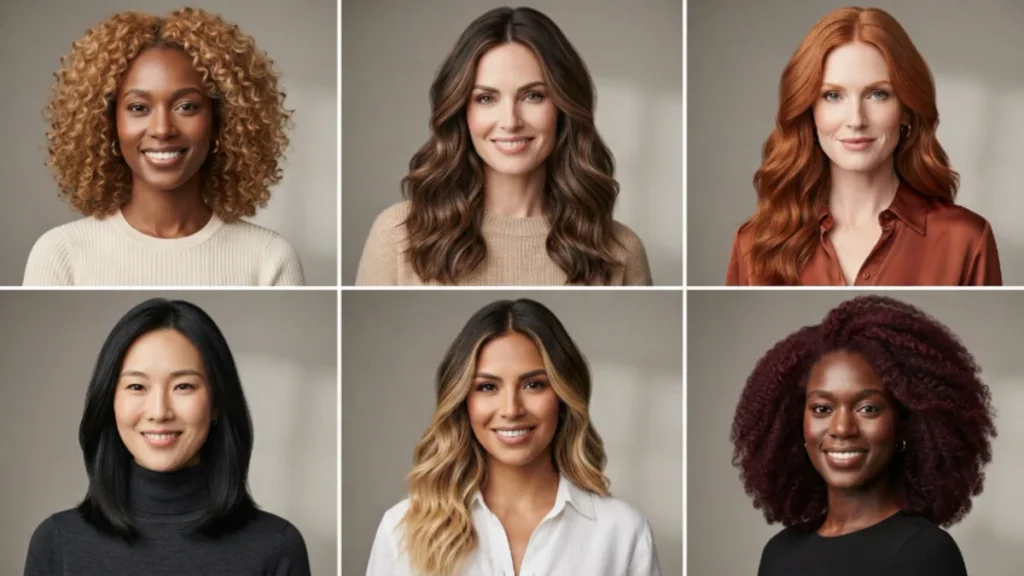
How to Narrow Down Hair Color Ideas
| Direct answer Start with four decisions: your starting hair depth, your preferred warm or cool direction, the amount of contrast you want, and your maintenance tolerance. Those factors narrow hundreds of hair color ideas into choices that are more realistic for your hair and routine. |
A reference photo is useful, but it is not a universal formula. The same named shade can look different because starting level, previous color, lighting, styling, and technique change the result. Two images labeled with the same color can therefore represent different formulas. The best hair color ideas are therefore the ones that describe the tone, depth, and placement you actually want.
First decide whether you want a subtle refresh, visible dimension, a major transformation, or a fashion color. Then decide where you want the change. All-over color changes the base, highlights introduce selected brightness, face-framing pieces concentrate the effect around the front, and hidden color keeps much of the change underneath.
- Subtle refresh: chocolate brown, honey brown, soft black, or bronde.
- More brightness: honey blonde, buttery blonde, caramel, or highlights.
- More warmth: copper, auburn, golden brown, or strawberry blonde.
- Cooler contrast: ash blonde, mushroom brown, blue-black, or cool brunette.
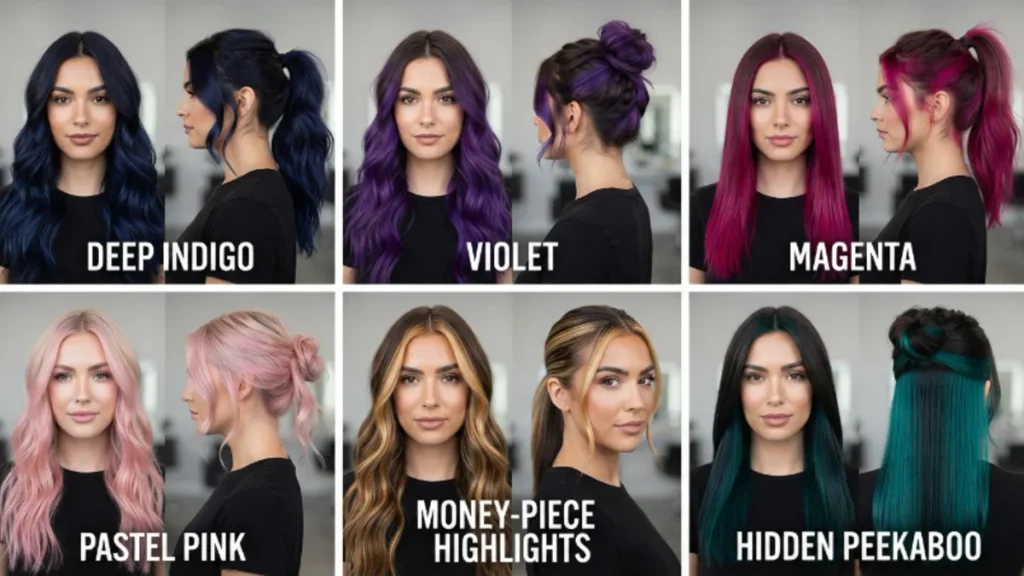
- Creative change: burgundy, indigo, violet, magenta, or hidden color.
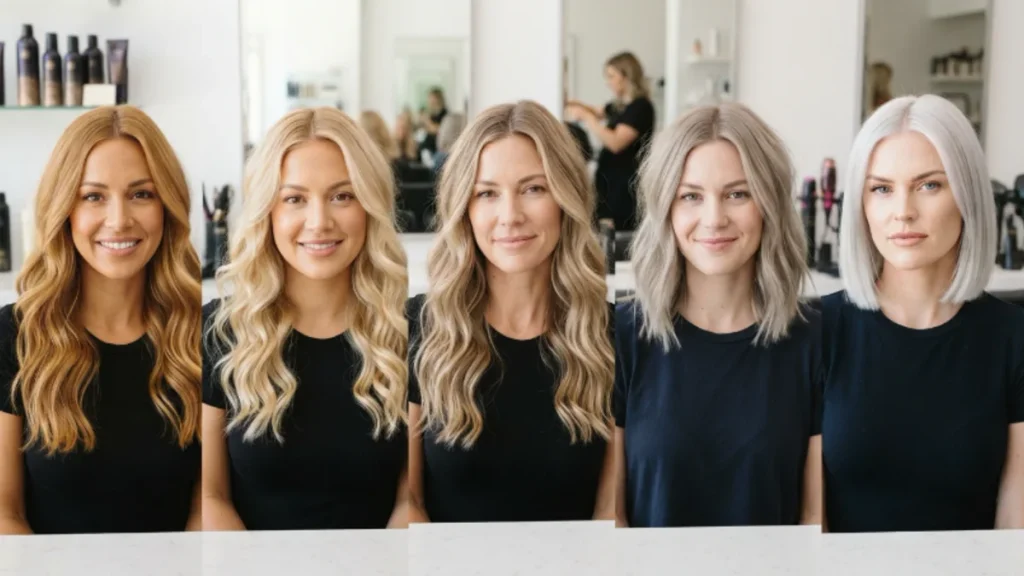
Blonde Hair Color Ideas
These hair color ideas cover the most useful variations in this family. Focus on the difference between tone, depth, placement, and maintenance rather than choosing by shade name alone.
1. Honey Blonde
Honey blonde combines golden warmth with blonde brightness. It is useful when you want warmth without the icy appearance of very cool blonde.
2. Buttery Blonde
Buttery blonde has creamy golden character and can be worn as a dimensional blend or a more uniform shade. Redken includes it among its current blonde examples.
3. Champagne Blonde
Champagne blonde can sit between strongly warm and strongly cool blonde. Ask to see the intended tone in natural light because beige, gold, and cool reflects can shift the impression.
4. Ash Blonde
Ash blonde uses cooler, muted reflects. The starting level determines how much lightening is needed to create it.
5. Platinum Blonde
Platinum is a very light, high-contrast blonde. Moving dark hair toward platinum can require substantial lightening, so hair condition and previous chemical history matter.
6. Icy Blonde
Icy blonde pushes cooler and brighter than many beige blondes. It can appear almost silver under some lighting.
7. Dirty Blonde
Dirty blonde keeps natural-looking depth through beige and honey variation, making it useful for a softer blonde result.
8. Lived-In Blonde
Lived-in blonde uses highlights and lowlights to create dimension while retaining some depth at the root.
9. Strawberry Blonde
Strawberry blonde blends blonde with red or copper character. The balance can lean golden, peachy, or copper.
10. Caramel Blonde
Caramel blonde combines brown or golden depth with lighter ribbons and can bridge brunette and blonde.
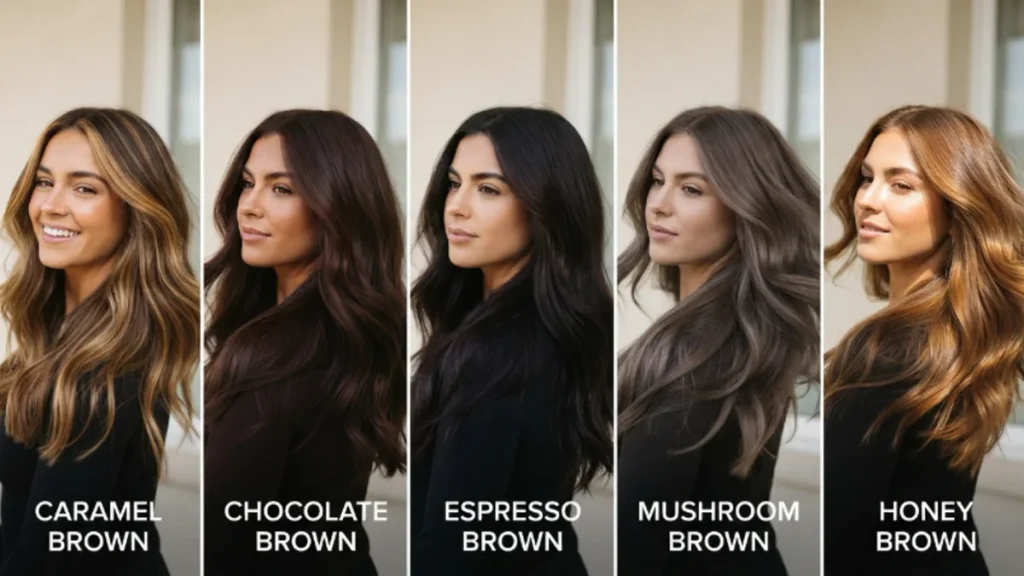
Brunette and Brown Hair Color Ideas
These hair color ideas cover the most useful variations in this family. Focus on the difference between tone, depth, placement, and maintenance rather than choosing by shade name alone.
11. Chocolate Brown
Chocolate brown is a rich brunette family that can be adjusted warmer or cooler.
12. Caramel Brown
Caramel brown introduces golden warmth into a brunette base and can work as an all-over shade or dimensional highlight.
13. Honey Brown
Honey brown combines brunette depth with golden warmth without requiring a full move into blonde.
14. Espresso Brown
Espresso brown is deep and polished, creating stronger contrast when the natural hair is lighter.
15. Mushroom Brown
Mushroom brown is a muted, cooler brunette direction for people who prefer less obvious gold or red.
16. Chestnut Brown
Chestnut brown sits in a warm brown family with red or golden character.
17. Mocha Brown
Mocha brown is a balanced coffee-inspired brunette direction that can be adjusted lighter or deeper.
18. Glossy Brunette
Glossy brunette emphasizes depth and reflection more than one fixed pigment.
19. Dimensional Brunette
Dimensional brunette combines a darker base with carefully placed lighter or warmer pieces.
20. Color-Drenched Brunette
Color drenching uses one concentrated shade with little visible variation. Allure identifies it as a notable 2026 direction.
Red, Copper, and Burgundy Hair Color Ideas
These hair color ideas cover the most useful variations in this family. Focus on the difference between tone, depth, placement, and maintenance rather than choosing by shade name alone.
21. Copper
Copper ranges from soft golden copper to brighter orange-red. Specify the desired saturation.
22. Auburn
Auburn combines red and brown and can give visible warmth without the brightness of vivid copper.
23. Amber Red
Amber red adds golden warmth to a red base and can create a luminous effect.
24. Cherry Cola
Cherry cola generally combines deep brown or burgundy depth with red, often revealing more color in direct light.
25. Burgundy
Burgundy sits in a deep red-purple family and can be used as an all-over color or dimensional accent.
26. Plum Red
Plum red adds purple to a red foundation. On dark hair it may appear mainly as a reflective tint.
27. Strawberry Copper
Strawberry copper combines lighter warmth with red and copper character.
28. Deep Cherry
Deep cherry is a darker red direction that stays rich rather than bright.

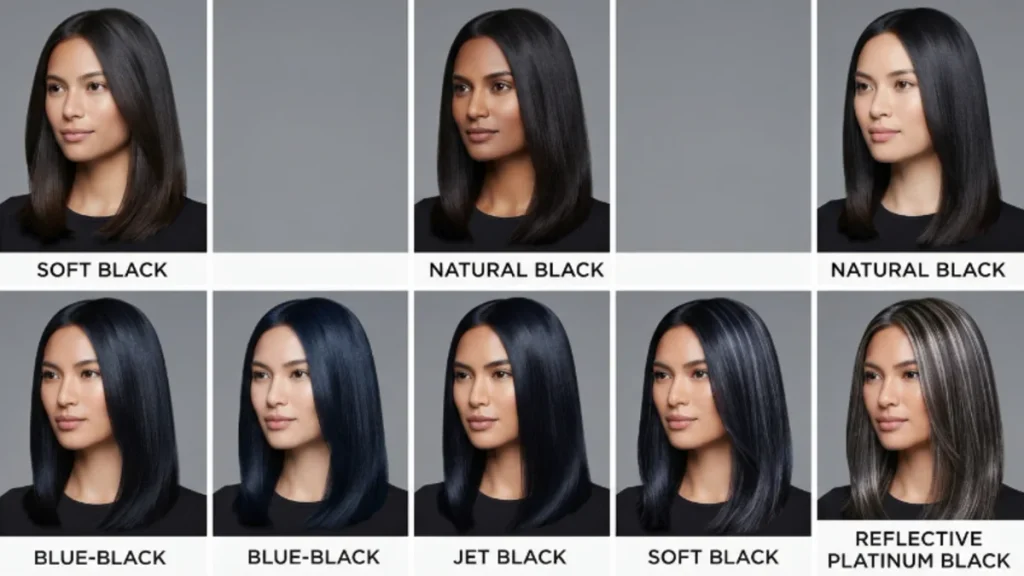
Black Hair Color Ideas
These hair color ideas cover the most useful variations in this family. Focus on the difference between tone, depth, placement, and maintenance rather than choosing by shade name alone.
29. Soft Black
Soft black keeps strong depth while appearing slightly gentler than the darkest black.
30. Blue-Black
Blue-black combines very dark depth with cool blue reflect that becomes clearer under direct light.
31. Jet Black
Jet black is intensely dark and crisp. Consider future color plans before choosing permanent deep color.
32. Reflective Black
Reflective black emphasizes shine and tonal depth rather than an obvious secondary color.
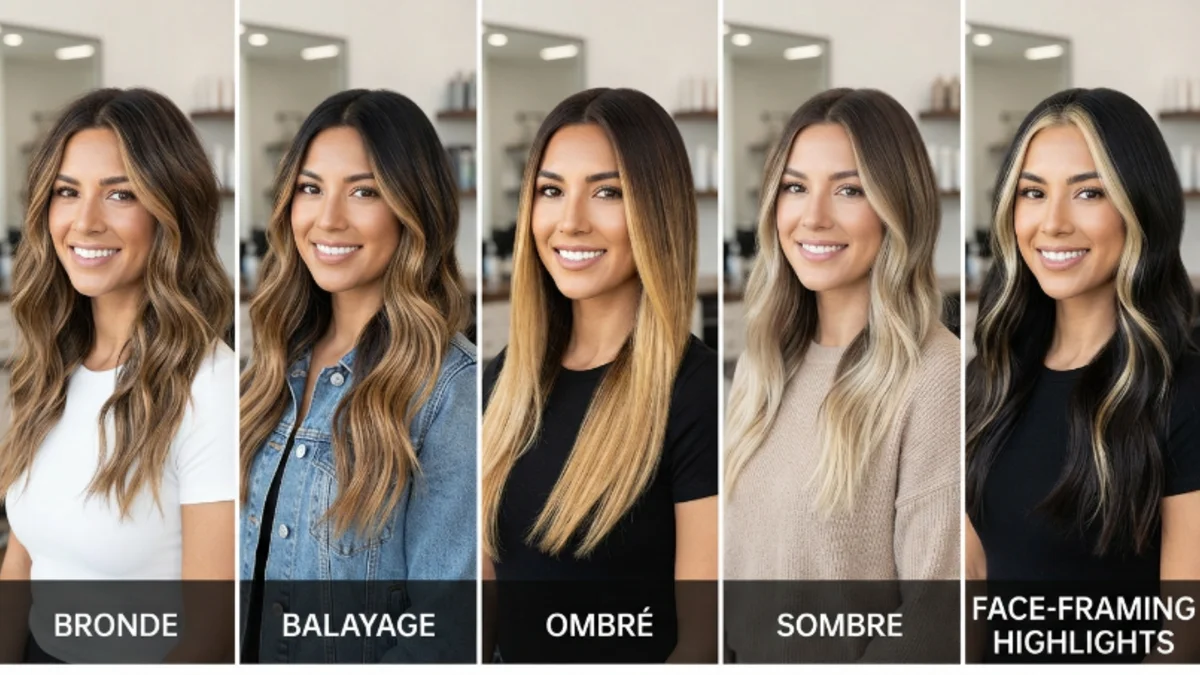
Dimensional Hair Color Ideas
These hair color ideas cover the most useful variations in this family. Focus on the difference between tone, depth, placement, and maintenance rather than choosing by shade name alone.
33. Bronde
Bronde sits between brown and blonde and can preserve brunette depth while adding brightness.
34. Balayage
Balayage is a highlighting technique based on customized placement, not one fixed shade.
35. Ombré
Ombré creates a visible transition from darker roots toward lighter lengths or ends.
36. Sombre
Sombre is a softer gradient than a high-contrast ombré.
37. Face-Framing Highlights
Face-framing highlights concentrate brightness around the front sections.
38. Money-Piece Highlights
Money-piece highlights are deliberately noticeable face-framing pieces.
39. Hidden or Peekaboo Color
Hidden color sits beneath the top layer and becomes more visible through movement or styling.
40. Color-Drenched Hair
Color drenching creates a concentrated single-color impression with very little visible variation.
How Skin Undertone Can Guide Hair Color Ideas
Undertone can narrow the field, but it should not become a rigid rule. Redken’s current blonde guide groups warm complexions with shades such as honey, buttery, gold, and strawberry blonde, and cooler complexions with ash, platinum, ice, and winter blondes. Neutral complexions have more room to move between families. Treat these as starting points, not guarantees.
| Undertone | Hair Color Ideas | Possible Direction | Question |
| Warm | Honey, caramel, golden brown, copper | Enhance warmth | How much gold or red? |
| Cool | Ash blonde, mushroom brown, blue-black | Create cooler contrast | How smoky or icy? |
| Neutral | Beige blonde, balanced brown, bronde | Move between warm and cool | Which direction fits your style? |
Natural hair depth, eye color, contrast, previous color, and personal preference also affect the result. If you love a shade that does not fit a simple undertone chart, use the chart as a guide rather than a prohibition.
How Natural Hair Color Changes Hair Color Ideas
The same formula does not produce the same visual result on every starting level. Dark, medium, light brown, and blonde hair expose different underlying pigments when lightened. Deposit-only color can also behave differently from a service designed to lift the natural base. That is why realistic hair color ideas should always be considered in relation to the starting base.
Tell your colorist about permanent color, semi-permanent color, bleach, henna, relaxers, and other chemical services in your hair history. Previous treatments can affect both the achievable result and the condition of the hair.
Hair Color Ideas by Maintenance Level
| Direct answer For lower maintenance, keep more of your natural root and consider blended techniques such as balayage, bronde, or sombre. Higher-contrast all-over color, very light blonde, and vivid fashion shades can require more attention because regrowth or fading becomes more noticeable. |
| Approach | Maintenance | Why | Question |
| Natural-root balayage | Often lower | Softer root boundary | Can I keep my root? |
| Bronde or sombre | Moderate | Blended contrast | How much brightness? |
| All-over brunette | Moderate | Root contrast varies | How different from natural? |
| All-over blonde | Often higher | Root contrast can show | How often can I maintain it? |
| Vivid fashion color | Often higher | Saturation changes with fading | Am I ready for refreshes? |
How to Choose Between All-Over Color and Dimension
When comparing hair color ideas, decide where you want the visual change. All-over color makes the base shade the main statement. Dimension distributes contrast across selected sections. Face-framing techniques concentrate attention near the front, while hidden color makes the change dependent on movement and styling. The most practical hair color ideas account for placement as well as shade.
- Choose all-over color when the base shade is the transformation.
- Choose highlights when you want selected brightness or contrast.
- Choose balayage when you want customized lightness with a blended transition.
- Choose face-framing highlights when you want visible change near the face.
- Choose hidden color when you want a creative shade that can be concealed.
Hair Color Ideas by Style Goal
For a Natural Refresh
Explore chocolate brown, honey brown, soft black, bronde, lived-in blonde, or subtle caramel dimension. These hair color ideas become easier to compare once you decide how much contrast and maintenance you can accept.
For More Brightness
Explore honey blonde, buttery blonde, caramel blonde, face-framing highlights, or balayage. These hair color ideas become easier to compare once you decide how much contrast and maintenance you can accept.
For More Warmth
Explore copper, auburn, amber, honey brown, or strawberry blonde. These hair color ideas become easier to compare once you decide how much contrast and maintenance you can accept.
For a Cooler Finish
Explore ash blonde, mushroom brown, blue-black, cool brunette, or plum. These hair color ideas become easier to compare once you decide how much contrast and maintenance you can accept.
For a Bold Change
Explore burgundy, indigo, violet, magenta, or vivid hidden color. These hair color ideas become easier to compare once you decide how much contrast and maintenance you can accept.
How to Prepare for a Hair Color Consultation
Bring two or three references instead of one heavily edited photograph. The best references show the color in ordinary light and reveal the root, mid-lengths, ends, and texture. Explain what you like about each reference and what you do not want.
- State your natural hair color and previous chemical treatments.
- Explain your warm, cool, or neutral preference.
- Describe how much contrast you want from your natural root.
- Give an honest estimate of how often you can maintain the color.
- Ask how the color will look as it fades.
- Mention any future plan to go substantially lighter or darker.
- Ask whether the requested service is realistic for the current condition of your hair.
If You Are Coloring Your Hair at Home
The U.S. Food and Drug Administration advises following package directions, performing a patch test before use, wearing gloves, rinsing the scalp thoroughly, and not leaving dye on longer than directed. The FDA also advises never dyeing eyebrows or eyelashes at home.
The NHS reports that hair dye reactions can include itching, burning, rash, dryness, soreness, and blisters. Symptoms can take up to 72 hours to appear, and serious allergic reactions are rare but possible. Stop using a product if you react and seek appropriate medical advice.
| Safety reminder A patch test is an important precaution, but it does not guarantee that a reaction cannot occur. Follow the product’s instructions every time and do not continue using a dye if you develop a reaction. |
How to Keep Hair Color Looking Fresh
Color longevity depends on the formula, starting hair, washing habits, heat, sun, and other factors. Use care appropriate for color-treated hair, limit unnecessary high heat, and follow your colorist’s washing and toning instructions. Good hair color ideas also include a plan for keeping the result healthy and visually balanced.
- Use heat protection before hot styling.
- Avoid unnecessarily hot water if fading or dryness is a concern.
- Protect hair from prolonged sun exposure when practical.
- Ask about chlorine-related color changes if you swim often.
- Use conditioning treatments when colored hair feels dry.
- Schedule refresh services based on visible regrowth or fading.
Common Mistakes When Choosing Hair Color Ideas
Choosing Only by Shade Name
Caramel, ash, chocolate, and copper describe families rather than universal formulas. Depth and undertone matter.
Ignoring Previous Color
Previously colored hair can behave differently from virgin hair, and a new dye does not automatically erase earlier color.
Underestimating Contrast
A small difference from the natural root can be subtle, while a large difference can make regrowth more visible.
Using an Edited Photo as a Guarantee
Filters, lighting, styling, and editing can change the apparent shade. Use several references.
Ignoring Future Plans
A dramatic dark or vivid change can affect what is realistic later, so discuss future goals before committing.
A Quick Hair Color Ideas Decision Matrix
| Priority | Hair Color Ideas | Main Decision |
| Subtle change | Honey brown, chocolate, soft black, bronde | How much contrast? |
| More brightness | Honey blonde, caramel, balayage | How light can the hair safely become? |
| Warmth | Copper, auburn, honey brown | How much red or gold? |
| Coolness | Ash blonde, mushroom brown, blue-black | How muted or dramatic? |
| Bold color | Burgundy, indigo, violet, magenta | How much maintenance? |
| Lower commitment | Face-framing, hidden color, subtle balayage | Where should color be visible? |
Final Thoughts
The most useful hair color ideas do more than show attractive shades. They explain why a color may look different from a reference, how starting depth changes the result, where contrast will appear, and what maintenance will be required.
Use the shade families in this guide to choose a direction, then narrow it using your natural hair level, undertone, desired contrast, and maintenance tolerance. If the change involves substantial lightening or correction, a professional consultation can help establish a realistic process. This approach also makes hair color ideas easier to discuss with a stylist because you can explain the result instead of relying on a shade name alone.
FAQs
What are the most popular hair color ideas in 2026?
Current 2026 coverage includes warm and natural-looking blondes, deeper brunette shades, copper and red families, lived-in dimension, and bold fashion colors. Reporting also highlights concentrated single-shade color and richer tones with visible shine.
How do I choose hair color ideas for my skin tone?
Use undertone as a starting point, then consider natural hair depth, desired contrast, and personal preference. Warm, cool, and neutral undertones can all work with multiple color families.
What hair color is easiest to maintain?
Blended approaches that preserve more of the natural root can reduce the visual impact of regrowth. Balayage, bronde, and sombre are common directions when softer transitions are a priority.
Should I choose balayage or all-over color?
Choose all-over color when the base shade is the main transformation. Choose balayage when you want selected brightness and dimension with customized placement.
Can I use a photo as an exact hair color formula?
A photo is best treated as inspiration. Lighting, filters, starting hair color, previous treatments, and technique can all change the final result.
How long should I patch test hair dye?
The FDA advises leaving a small amount of dye on the skin for two days and doing the test each time you dye your hair. Follow the product’s own instructions as well, and do not use the dye if the test produces a rash.
What should I tell my stylist before choosing a new color?
Explain your natural color, previous chemical treatments, desired warmth or coolness, preferred contrast, and maintenance limits. Mention any future plan for another major color change.
Can dark hair become platinum blonde in one appointment?
It depends on starting level, previous color, hair condition, and the amount of lift required. Significant lightening can be demanding, so a colorist should assess the hair and discuss a realistic process.
How can I keep my new hair color looking fresh?
Follow your colorist’s care instructions, limit unnecessary heat, condition the hair, and protect it from prolonged sun exposure when practical. The exact routine depends on the shade and hair condition.
What should I do if hair dye causes itching or burning?
Stop using the product and seek appropriate medical guidance. The NHS notes that hair dye reactions can cause itching, burning, rash, dryness, soreness, or blisters, while severe reactions are rare but can require urgent care.